Electric quay cranes prepare UK ports for larger ships
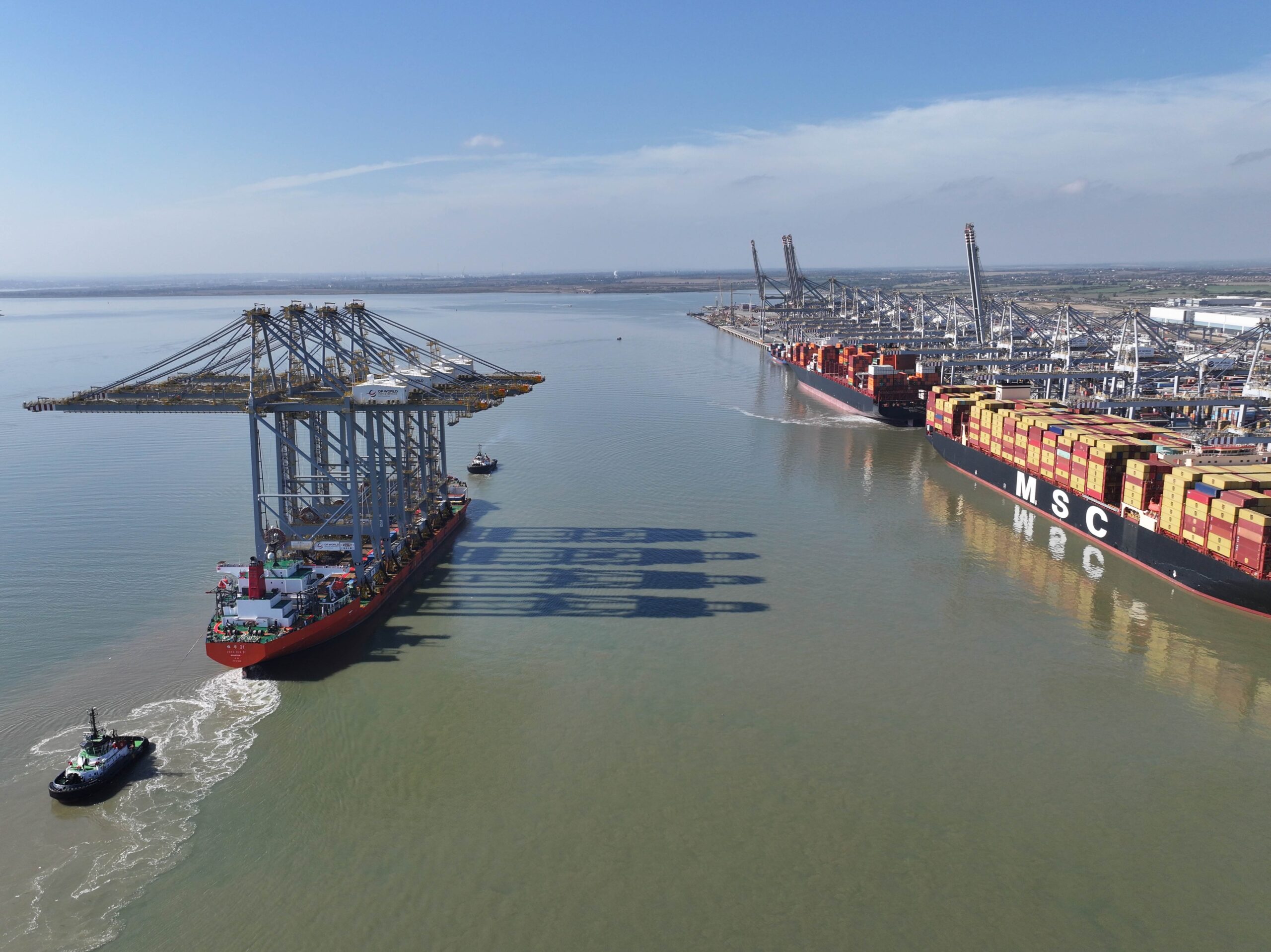
DP World is upgrading two of the UK’s main container gateways with four high-capacity quay cranes designed to handle the largest vessels in the global fleet. The equipment is intended to increase berth productivity as container ships continue to grow in size and trade volumes develop.
Two cranes reached London Gateway by sea from Shanghai on 25 September. Each weighs more than 2,000 tonnes and rises to almost 150 metres. They will serve the new all-electric Berth 5, now being built as part of DP World’s £1 billion expansion programme. The berth is scheduled to open in 2027, with two additional cranes planned for delivery in the coming months.
Designed for tandem container handling
The cranes can carry out consecutive tandem lifts, moving two 40-foot containers in a single operation. That capability allows the terminals to work with vessels of up to 24,000 TEU and offers shipping lines more capacity at each call. At Southampton, two further units are due to arrive after two cranes were delivered in June. The terminal will then have 16 quay cranes, with the four added this year representing a £60 million investment.
For industrial and logistics operators, the technology matters beyond the crane rail. Faster vessel turnaround can improve schedule reliability, while additional berth capacity gives importers and exporters more flexibility as supply chains respond to changing demand.
Capacity linked to wider economic impact
DP World’s accompanying economic assessment says London Gateway and its logistics park support 10,500 jobs across the wider economy and contribute £799 million to UK GDP. The company also says its London Gateway and Southampton operations handle 46% of UK containerised trade.
Southampton connects Britain with Asia, the Middle East and the Americas. London Gateway’s expansion includes two further all-electric berths, taking the site to six, as well as a second rail terminal. DP World expects the development to make London Gateway the UK’s largest container port before the end of the decade.
The use of electric cranes also aligns the capacity project with the Port of London Authority’s net-zero ambition, showing how port expansion is increasingly being paired with lower-emission equipment.