Europa turns Dartford warehouse roof into a power asset
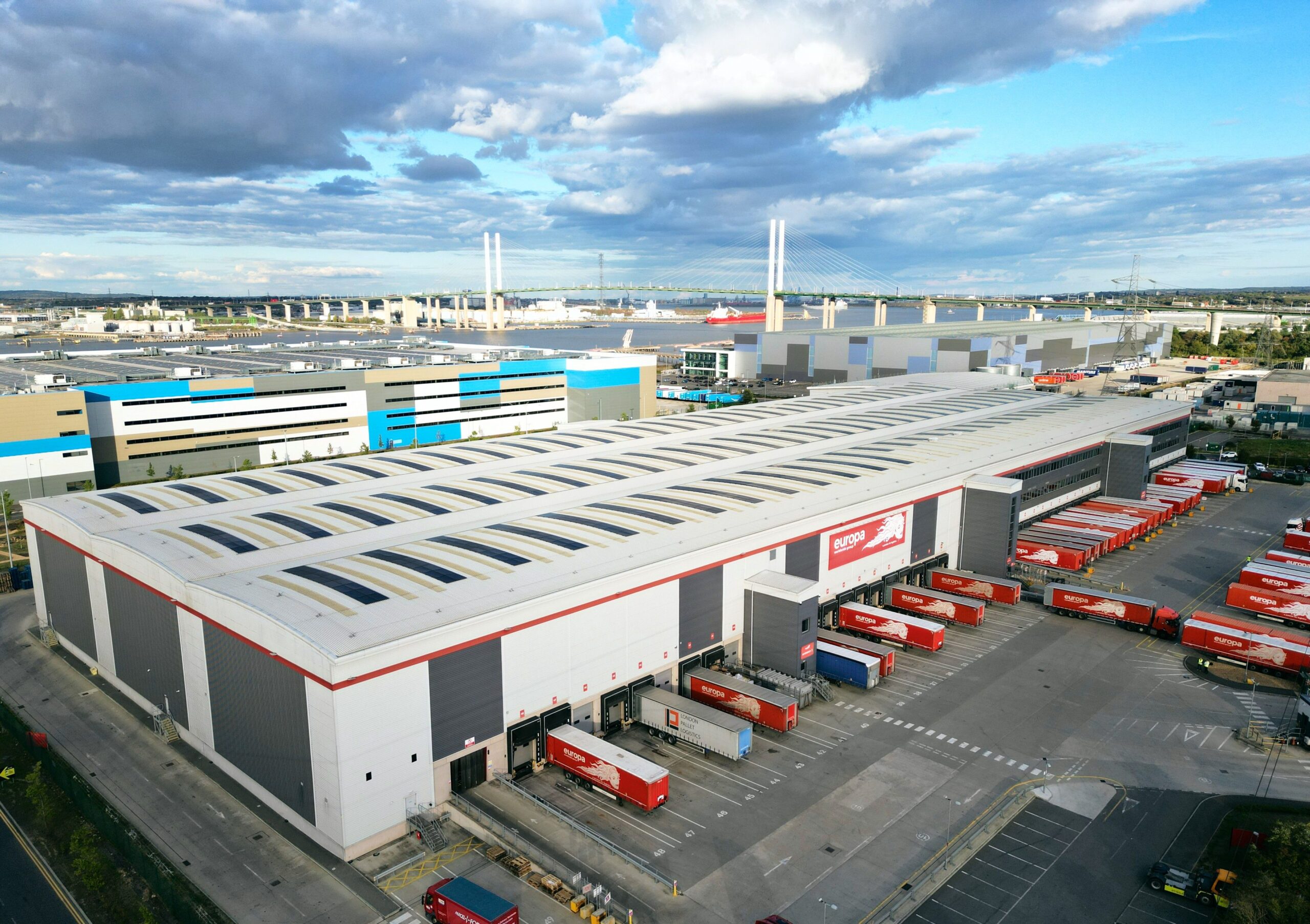
Europa Worldwide Group is using the roof of its Dartford logistics hub as an operational energy asset after commissioning a 600 kWp photovoltaic installation with landlord Prologis.
The system is forecast to generate 541,800 kWh of renewable electricity each year. At current power prices, Europa expects first-year savings of about £80,000. During the installation’s first month, solar supplied more than 40% of the site’s electricity consumption.
Energy technology built around warehouse demand
The 26,368-square-metre facility is Europa’s European road freight hub and also supports its specialist 3PL activity. That gives the site significant daytime demand, when rooftop generation is available. The project therefore links on-site generation directly with the operating profile of a modern logistics facility rather than treating the roof as unused space.
Europa had considered solar at Dartford for several years, but progress involved multiple stakeholders, including the occupier, landlord, energy specialists, network operators, insurers and legal teams. Structural checks, grid connections, lease provisions and insurance requirements can all delay similar schemes.
The project was delivered through a 30-year Power Purchase Agreement. Prologis funded and coordinated the installation through Prologis Essentials, covering energy assessment, system sizing, approvals, procurement, construction and commissioning. Europa can buy the electricity generated on the roof without paying the upfront capital cost. The agreement also avoids dilapidation or exit charges if the company leaves before the solar term expires.
A model for industrial resilience
The installation is Europa’s first rooftop solar system and Prologis’ 48th in the UK. It is intended to provide locally generated renewable power for three decades, supporting lower emissions and greater control over energy exposure.
The UK Warehousing Association estimates that warehouse roofs could accommodate 17.3 GW of solar capacity, yet research covering more than 300 roofs found installations on only 5%. The Dartford project suggests that turnkey, landlord-led delivery could help close that gap, alongside faster grid connections and clearer commercial arrangements. For industrial companies, the lesson is practical: energy technology can be deployed more quickly when responsibility for design, finance and delivery is assembled into one operating model.