Forklifts Gain a Software Layer for Changing Operations
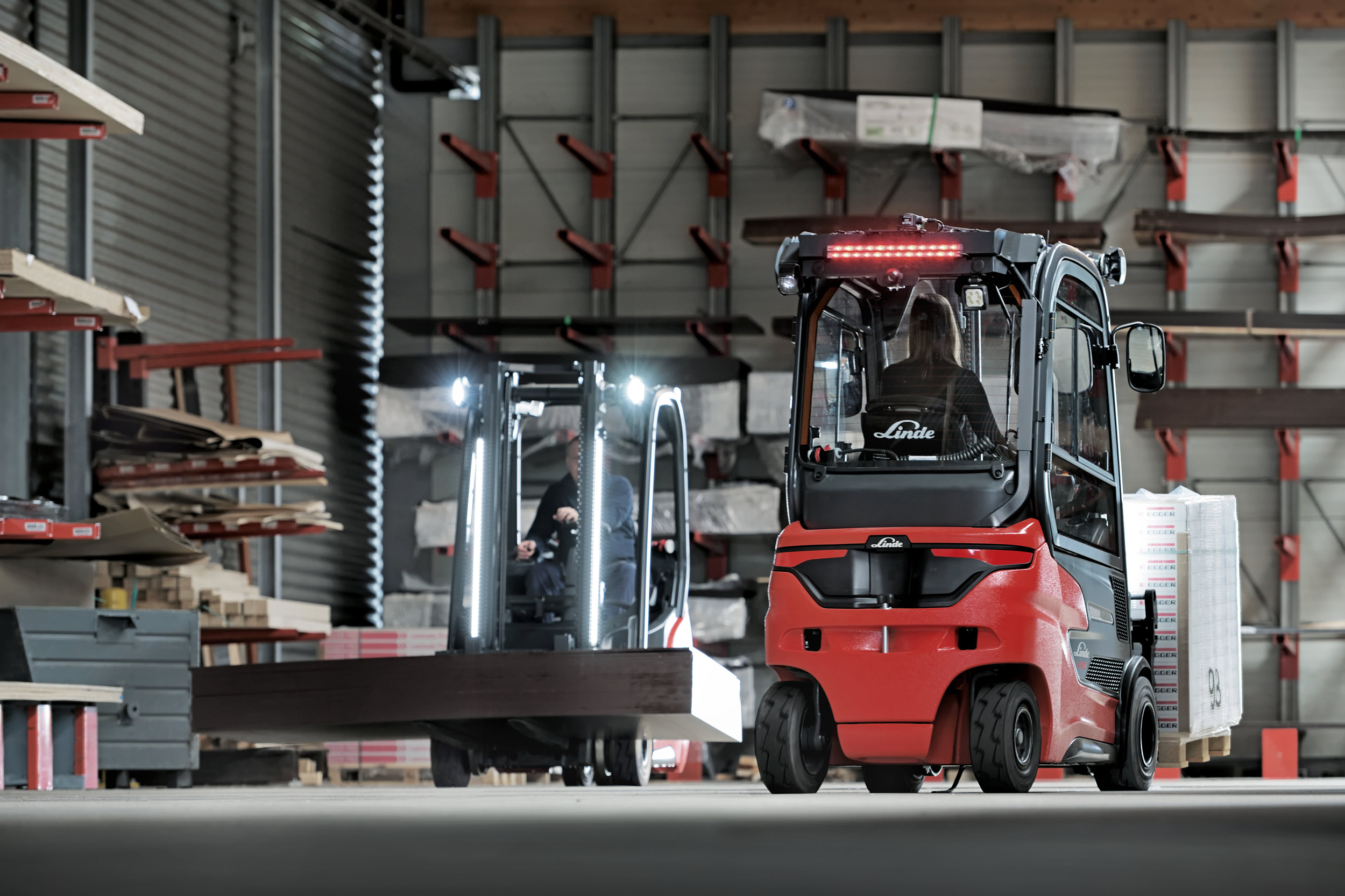
Industrial trucks are becoming more adaptable as Linde Material Handling moves a growing share of customer-specific configuration into software. The approach is designed to help warehouses respond to changing material-flow requirements without replacing equipment every time the operation changes.
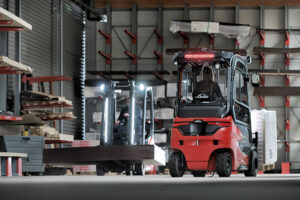
Linde calls these adaptations Customized Options. More than one-third of its trucks are delivered with at least one such option, ranging from specialist hardware to digitally controlled functions. The company’s latest electrical and electronic architecture links each physical truck to a digital twin from manufacture, creating a platform for later updates.
Updates after the truck enters service
With the new architecture, functions can be downloaded over the air and vehicle parameters adjusted for particular operating conditions. That could allow fleet managers to extend the practical life of trucks whose original specification no longer fully matches the warehouse.
Examples include reducing radio volume automatically while a truck is reversing, or limiting speed to 2 km/h when a load exceeds a defined weight or the forks are raised above a specified height. A rotating beacon can also show whether the operator has fastened the seatbelt.
According to Stefan Prokosch, Senior Vice President Customized Solutions at Linde MH, future material-flow needs and available technical options cannot be predicted comprehensively. Software-based adaptability is therefore intended to keep vehicles useful as conditions develop.
From mechanical adaptations to configurable platforms
Physical customisation remains important. Existing examples include stainless-steel pallet trucks for food production, controls adapted for operators with physical limitations, special forks for flat furniture pallets and heat-resistant wooden joysticks for foundry work. A reach truck has even been equipped with a specialised attachment shaped like a “Pinocchio nose” for moving heavy paper rolls with less risk of damage.
A global interdisciplinary team develops the options, while a graphical editor is being used to speed up the creation of digital functions and the transfer of parameter files to individual vehicles. For industrial companies, the significance extends beyond convenience: software can make fleet investments more resilient when automation, connectivity and production requirements continue to change.