LogiMAT’s Stuttgart journey charts the automation of intralogistics
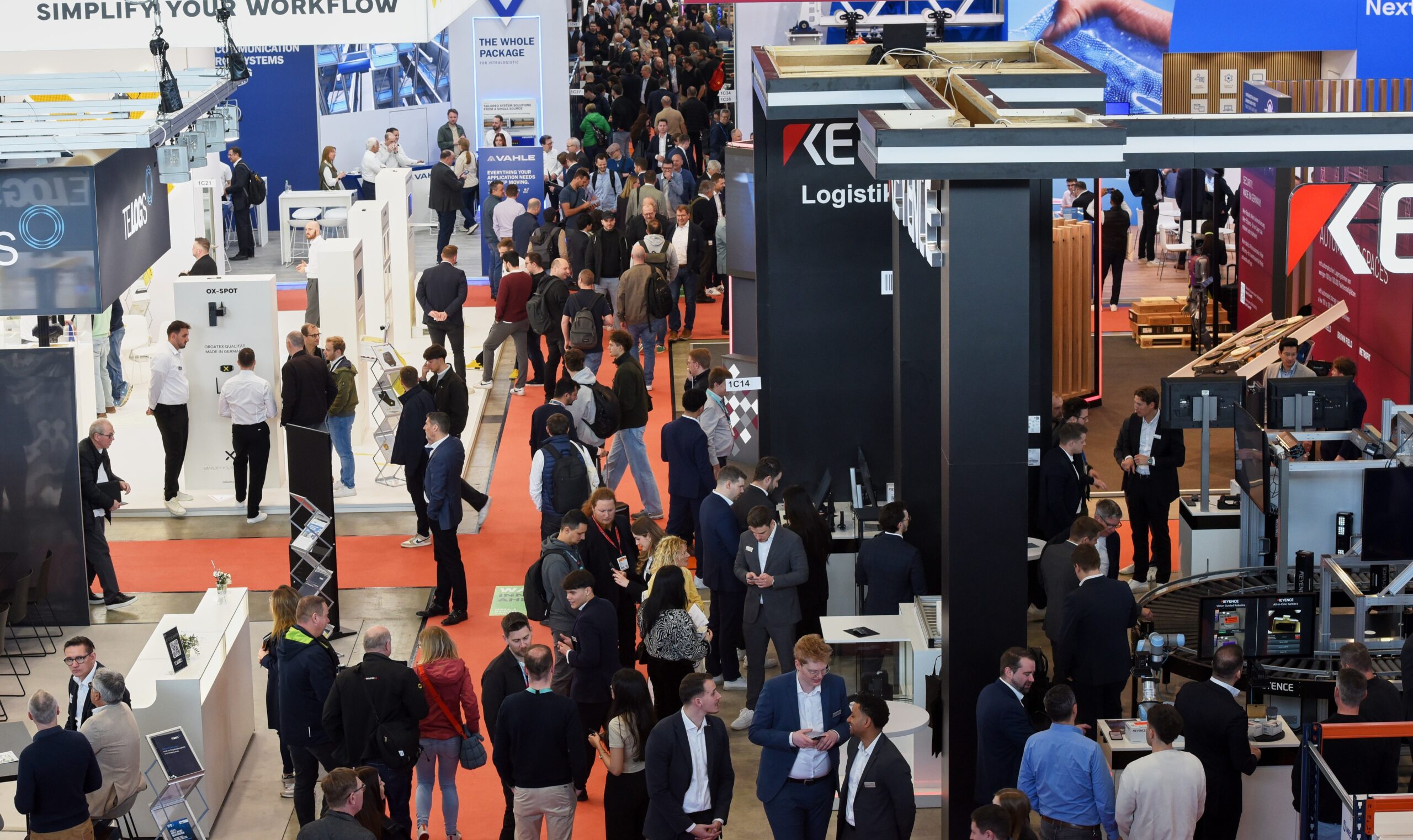
LogiMAT’s 25-year history in Stuttgart provides a useful timeline for the transformation of intralogistics. What began as a regional exhibition has become an international meeting point for companies evaluating automation, software and material-flow technologies.
The event opened in 2003 at the Killesberg exhibition grounds with 160 exhibitors and around 3,700 visitors. Its early programme already covered robots, automated guided vehicles, pick-by-light, pick-by-voice, RFID and cloud-based software. Those themes have since moved from emerging concepts into the technology stack of modern warehouses and production sites.
From digital processes to autonomous systems
LogiMAT’s early editions tracked the rapid digitisation of logistics. Picking technologies and software-as-a-service gained prominence in 2004 and 2005, while the 2006 programme focused on e-commerce, digital logistics and material-flow automation. By 2009, attention had shifted towards service-oriented architectures, AGV fleets, vehicle swarms and integrated systems.
Energy efficiency and sustainability entered the discussion around 2010, alongside environmentally focused warehouse construction and industrial trucks. Shuttle systems, machine vision, communications technology, improved energy storage and robotics subsequently became increasingly visible. For industrial operators, the significance is practical: scalable automation can connect storage, picking, transport and production rather than treating each process as a separate investment.
A larger platform for industrial decisions
LogiMAT moved to the Messe Stuttgart site near the airport in 2008. It initially occupied three halls, with more than 571 exhibitors and 15,000 visitors. Demand continued to rise as the show addressed the Internet of Things, adaptive systems, robotics, e-commerce and resource-efficient operations. By 2019, all ten halls were in use.
The 2020 pandemic forced the event online, but it returned to the full Stuttgart venue in 2022. Recent editions have highlighted autonomous robots, drones, intelligent sensors, artificial intelligence, connected warehouse systems and cloud platforms for management and analytics. Cybersecurity and supply-chain resilience have also become central concerns.
LogiMAT’s 2026 figures underline its international scale: 1,671 exhibitors and 69,856 professionals, with exhibitors from 46 countries. The anniversary therefore looks beyond nostalgia. For manufacturers and logistics operators, the show’s development signals how quickly experimental technologies can become operational infrastructure—and why integration, energy performance and resilience now matter as much as automation itself. LogiMAT remains based in Stuttgart and continues to position its exhibition and free conference programme around that changing industrial agenda.