




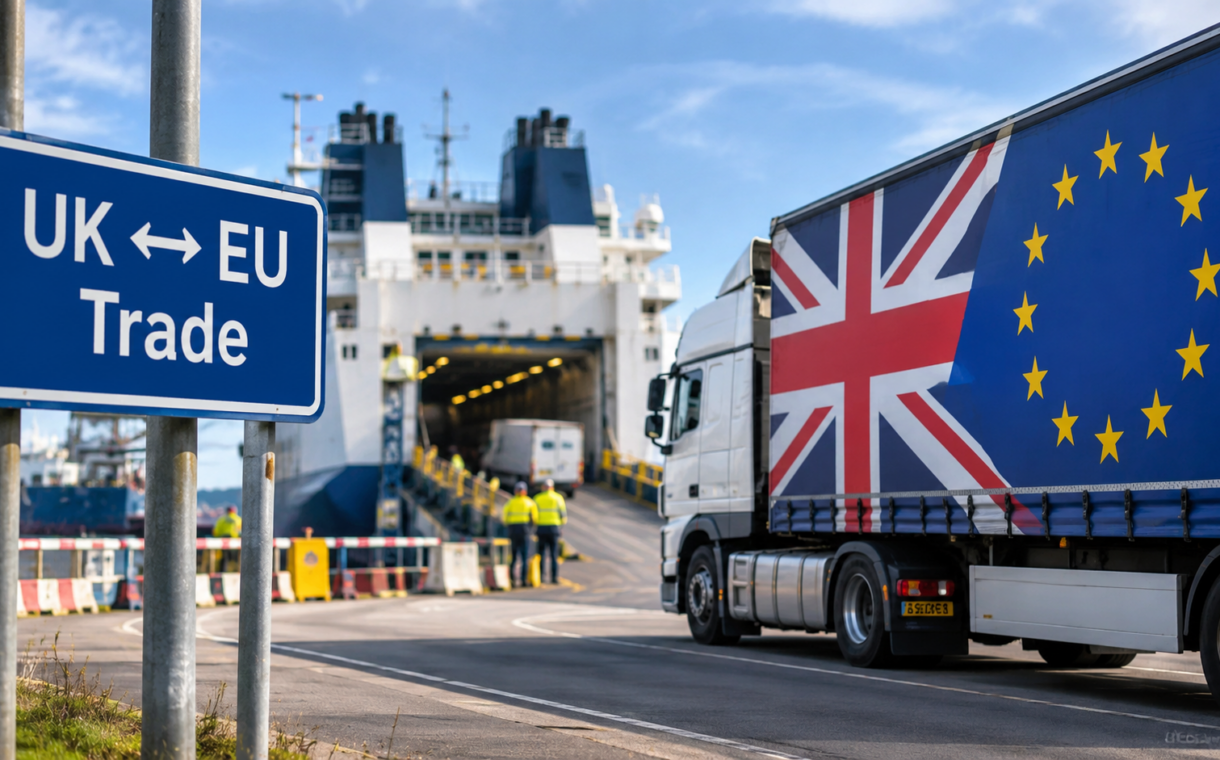
Progress at the UK-EU Summit could eventually make cross-border freight operations less paperwork-intensive, particularly for companies moving food and agricultural products. The British International Freight Association has welcomed the agreements while warning that their value will depend on how effectively they are translated into operational rules.
Negotiations on a Sanitary and Phytosanitary Agreement have concluded, with implementation targeted for March 2028. The proposed framework is intended to reduce inspections and certification requirements for eligible agricultural and food shipments. For manufacturers, distributors and logistics providers, that could mean fewer manual checks, more predictable transit planning and less administrative work at the border.
Digital processes will need early preparation
The transition is unlikely to be automatic. Freight forwarders and their customers may need to update customs workflows, compliance databases, document-generation tools and shipment instructions. Any change to the information required for a consignment can affect enterprise resource planning, transport management and customer-service systems.
Steve Parker, director general of the British International Freight Association, said businesses would need sufficient time to adapt their systems, processes and customer arrangements. He also called for detailed guidance and continued consultation with companies that manage trade in practice.
That request is significant for industrial supply chains, where a regulatory change can pass through several layers of suppliers, carriers and intermediaries. Clear rules published well before the planned start date would allow firms to test data exchanges, revise standard operating procedures and train staff without disrupting live shipments.
Carbon compliance remains part of the picture
BIFA has also welcomed progress towards linking the UK and EU Emissions Trading Systems. The proposed connection could simplify carbon-related trading obligations and reduce possible costs for businesses affected by Carbon Border Adjustment Mechanisms.
For industrial companies, the next task is to establish the exact timetable, scope and reporting requirements. Until those details are available, investment decisions around compliance automation will need to remain flexible. The summit agreements offer a potential efficiency gain, but reliable implementation will determine whether that gain reaches factories, freight operators and their customers.