Why long-load logistics is becoming a software problem
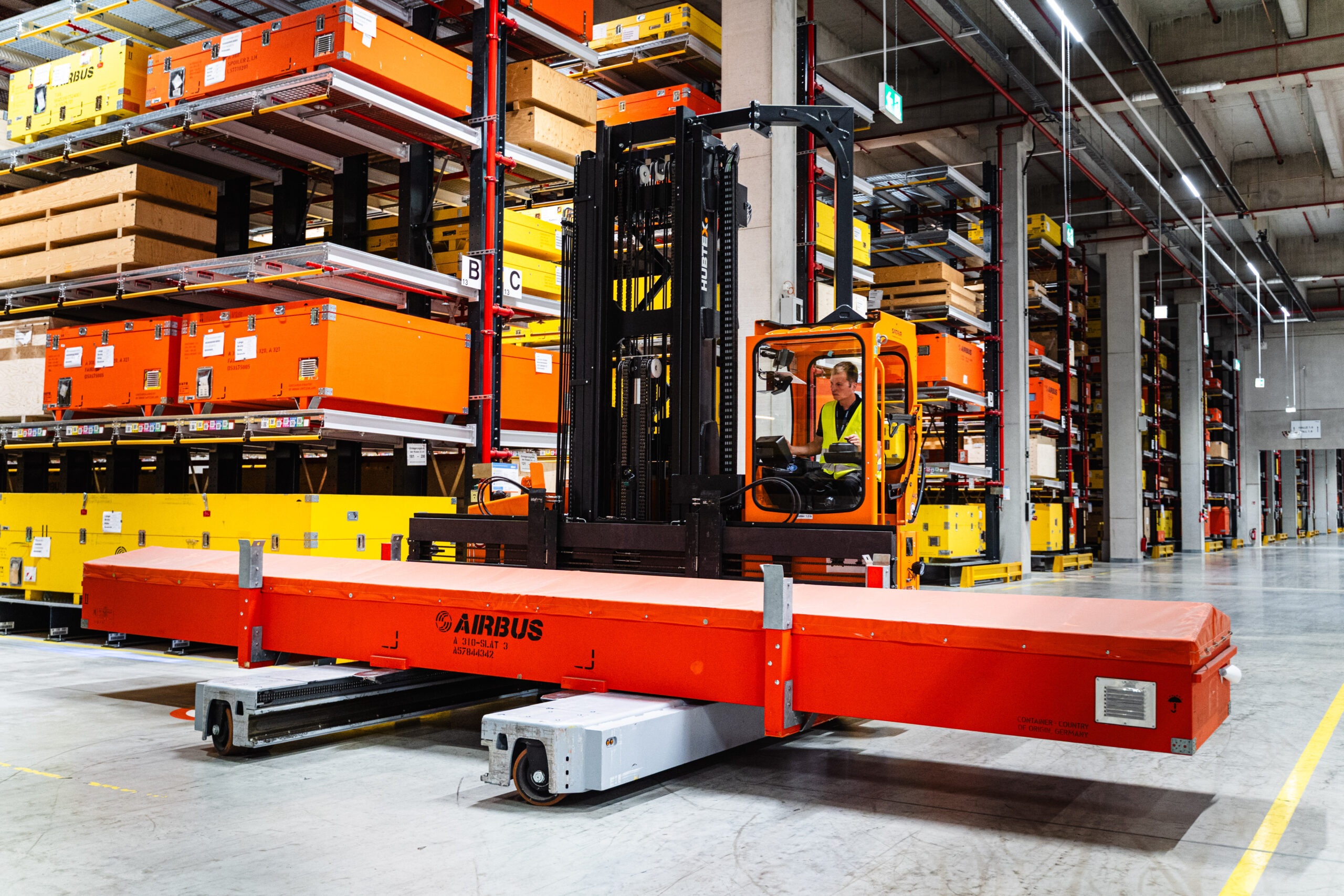
Handling glass, steel, timber or extruded plastics is not simply a question of choosing a forklift with sufficient capacity. For specialist truck maker Hubtex, the larger opportunity lies in connecting vehicle design with warehouse layout, operator assistance and continuous operational data.
Paul McNally, managing director of Hubtex UK, says customers increasingly expect equipment to remain productive for 10 to 15 years or longer. Some UK machines have been working for more than three decades. That long service life changes the business case: purchase price matters, but uptime, durability and the ability to adapt to changing workflows matter just as much.

Electric power for continuous operation
Hubtex has built its range around electric drive for many years, including applications involving round-the-clock work in timber, glass and steel. Large lithium batteries and charging systems are intended to support extended shifts while reducing the limitations once associated with electric trucks in heavy-duty handling.
The company’s approach is to examine the complete operation rather than respond only to a request for a three- or five-tonne vehicle. A review can cover picking, traffic movements, safety, training, storage density and the available working envelope. In one fixed-warehouse application, operator aids helped trucks enter racking areas more quickly and consistently, increasing capacity without rebuilding the facility.
Putting intelligence between operator and task
Guidance functions can automatically assist steering, while other systems help the operator position the truck in confined areas. The practical effect is to shift part of the cognitive burden from the driver to the vehicle. Hubtex says this can shorten the path to operator competence from about three months to roughly three weeks, widening the potential recruitment pool while improving consistency.

The same principle applies to digital integration. Customers want trucks to connect with warehouse-management systems and supply a continuous flow of data, making the vehicle part of the wider material-handling infrastructure rather than an isolated asset.
That combination of mechanical durability, electrification and assistance technology is also opening conversations in renewable energy and nuclear-related applications, where equipment must meet demanding testing and reliability expectations. For industrial companies, the message is clear: the most valuable long-load truck may be the one that improves the whole process around it.