Warehouse safety needs smarter impact protection
When a forklift strikes racking or a structural column, warehouse operators often expect the strongest available barrier to provide the best protection. That assumption is being challenged by a wider view of impact physics and its operational consequences.
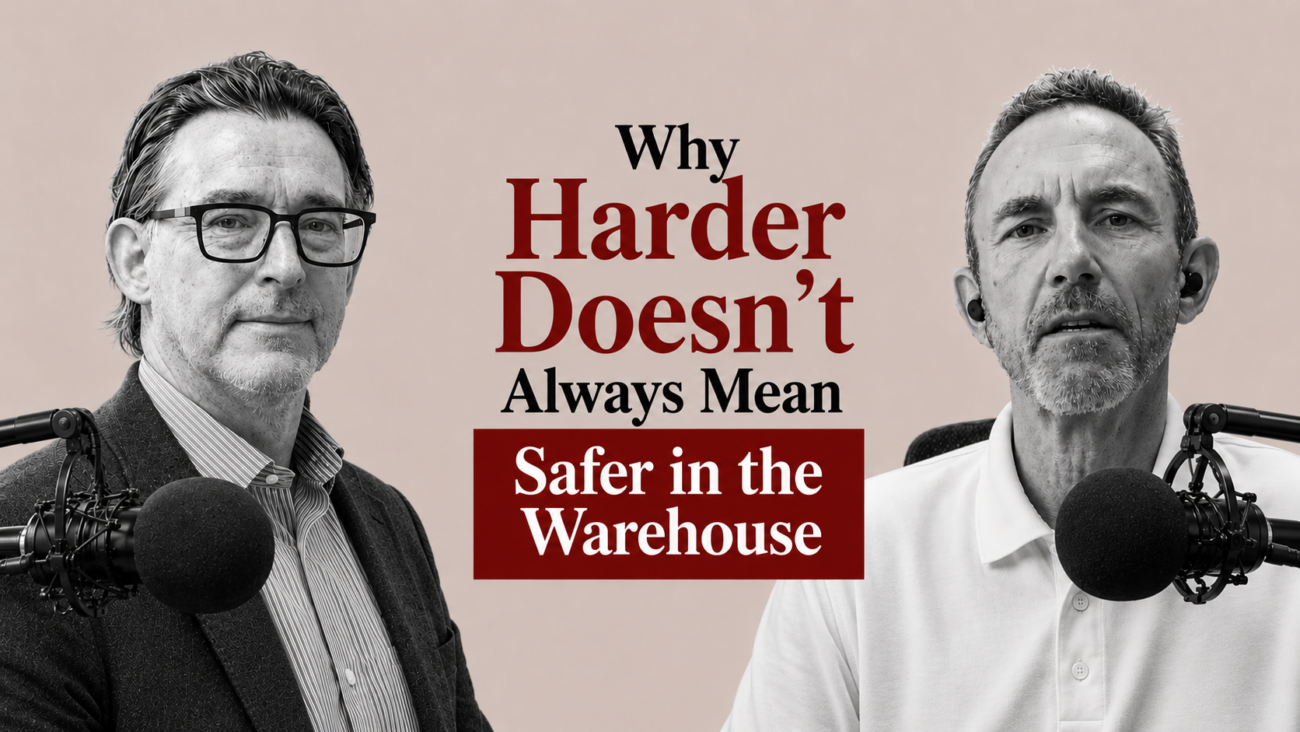
In a recent episode of Logistics Business Conversations, Peter MacLeod discussed the issue with Jim Ryan, founder of Sentry Protection Products. Drawing on almost 30 years of experience developing warehouse protection systems, Ryan examined what happens when several tonnes of materials-handling equipment meet critical infrastructure.
Protection is a system decision
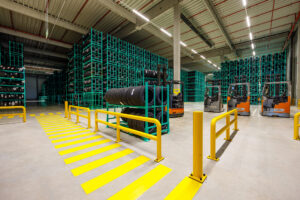
The visible damage after a collision can be misleading. A damaged rack or column may be only the first sign of a wider problem involving equipment, employees, stock, productivity and downtime. A protection system that appears exceptionally hard may transfer forces into another part of the warehouse rather than eliminating the risk.
That makes impact protection a technology and design question, not simply a purchasing decision. Operators need to consider how energy is absorbed, where forces travel and how quickly an affected area can return to service. The right solution may be less rigid if it reduces the severity of the event and limits secondary damage.
Automation raises new questions
The discussion also considers collision-avoidance technologies and the growing use of automation and autonomous vehicles. As warehouses become more connected, safety systems must work alongside software, sensors and mobile equipment rather than being treated as isolated physical infrastructure.
Ryan’s central message is that sophistication alone does not guarantee better results. Straightforward technologies, correctly matched to the environment, may deliver more practical value than complex systems that are difficult to deploy or maintain. For industrial companies, the objective is not merely to protect steelwork; it is to preserve people, throughput and resilience when an impact occurs.