Why shoeboxes are testing the limits of warehouse robots
Warehouse robots have become highly capable at transporting pallets, cartons and standardised totes. Yet a familiar item in fashion fulfilment continues to create a disproportionate challenge: the cardboard shoebox.
Shoeboxes account for about one-fifth of fashion ecommerce merchandise, so solving the handling problem has practical consequences. Unlike a sealed carton, a typical shoebox has a base and a loose lid. Small differences in lid overlap, box orientation and surface friction can make the top slide or detach when lifted.
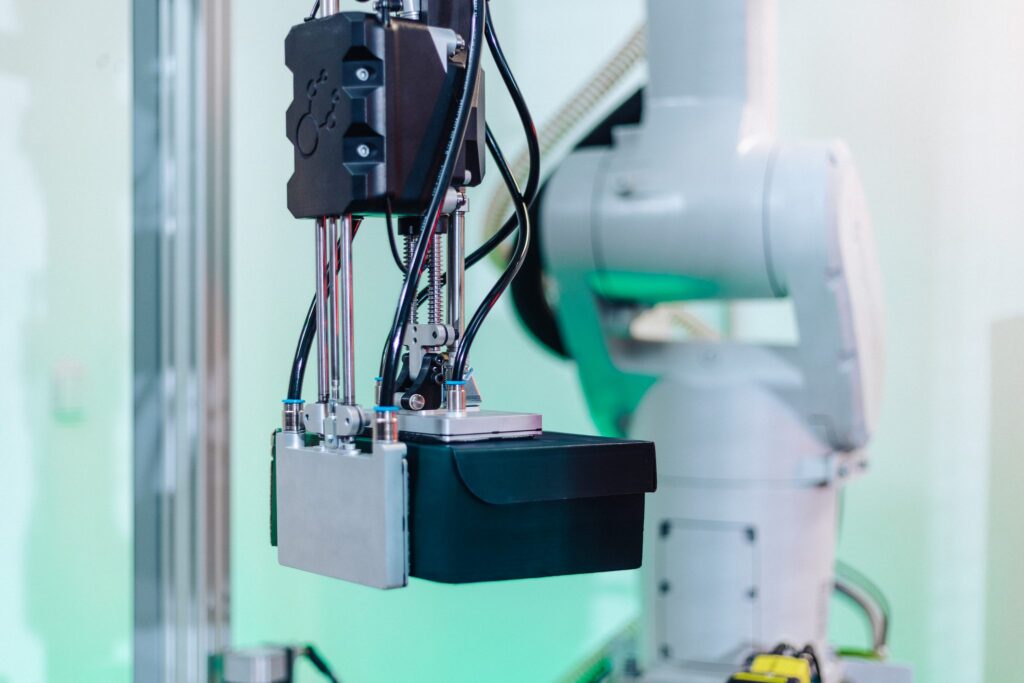
The range of products adds another layer of complexity. Distribution centres may process hundreds of designs, materials and sizes while stock profiles change throughout the day. Conventional grippers and fixed programs are therefore difficult to apply consistently.
Physical AI replaces rigid assumptions
Adding elastic bands might appear to be an easy solution, but shoe brands and retailers have found that banding can undermine presentation and the customer experience. Distribution partners are consequently instructed not to use it.
The alternative is a more adaptive approach. Physical AI combines machine vision, decision-making and robotic manipulation. A system must identify the object, assess its position and stability, select a safe grasp and adjust the movement according to the box’s physical characteristics.

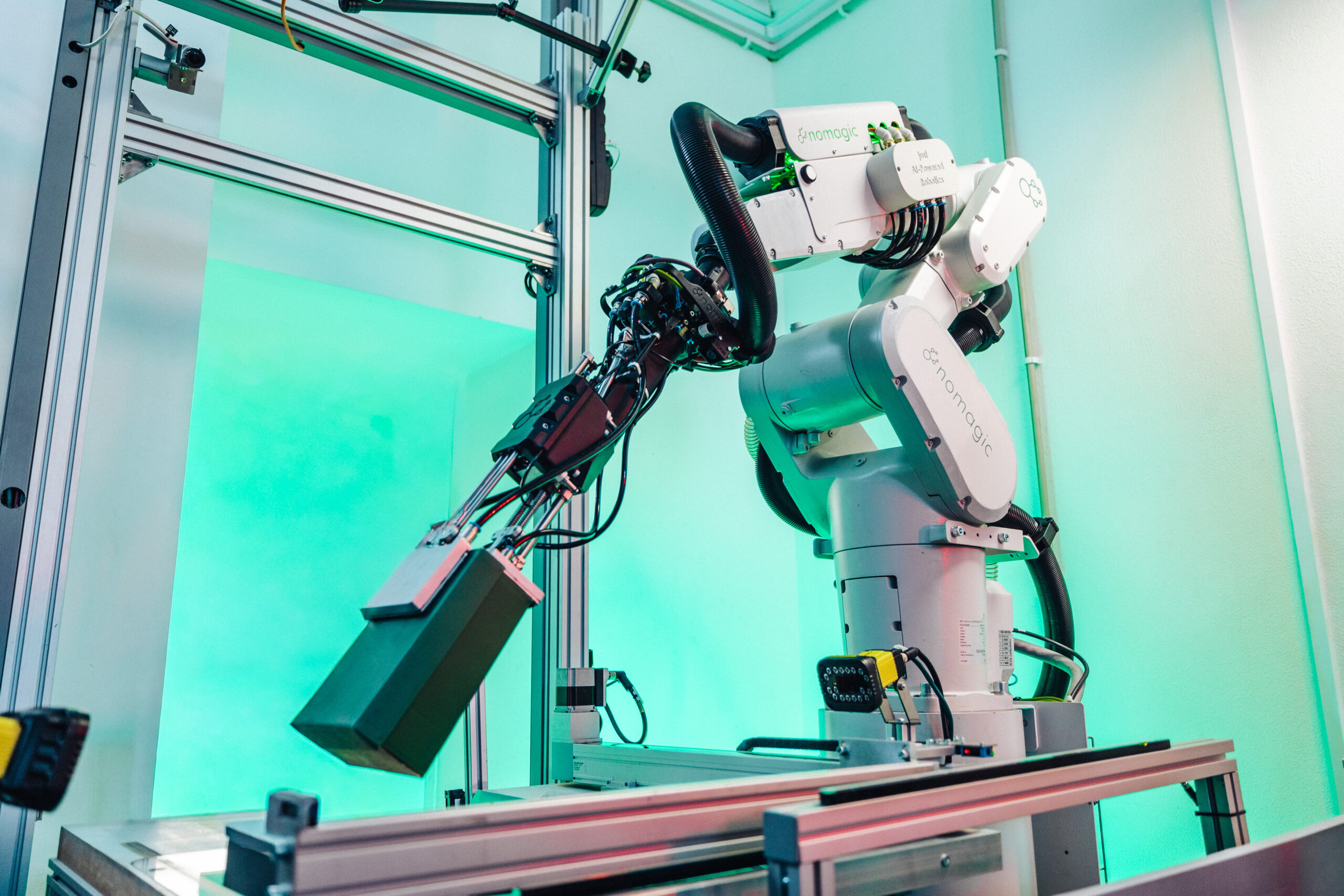
Three-dimensional vision can estimate dimensions and orientation before a pick. Machine-learning models select a suitable gripping method, while tactile feedback helps confirm whether the grasp has worked. If the box moves unexpectedly, the robot can reassess instead of treating the deviation as an automatic failure.
A specific solution with wider implications
Nomagic has developed a Shoebox Picker for this application. Its perception software and specialised end-of-arm tooling adapt the pick to the box’s size, lid position and orientation. The company says the system can handle approximately 98% of shoebox SKUs at rates of up to 450 boxes per hour.
The importance of the application extends beyond footwear. Fashion fulfilment requires flexibility across thousands of SKUs, seasonal demand peaks and increasingly rapid delivery expectations. Robots that can work with variation rather than forcing products into rigid formats could help operators expand automation without sacrificing assortment or presentation quality.