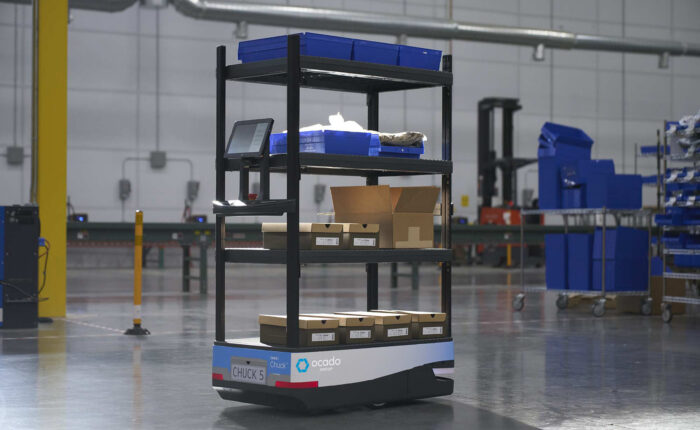





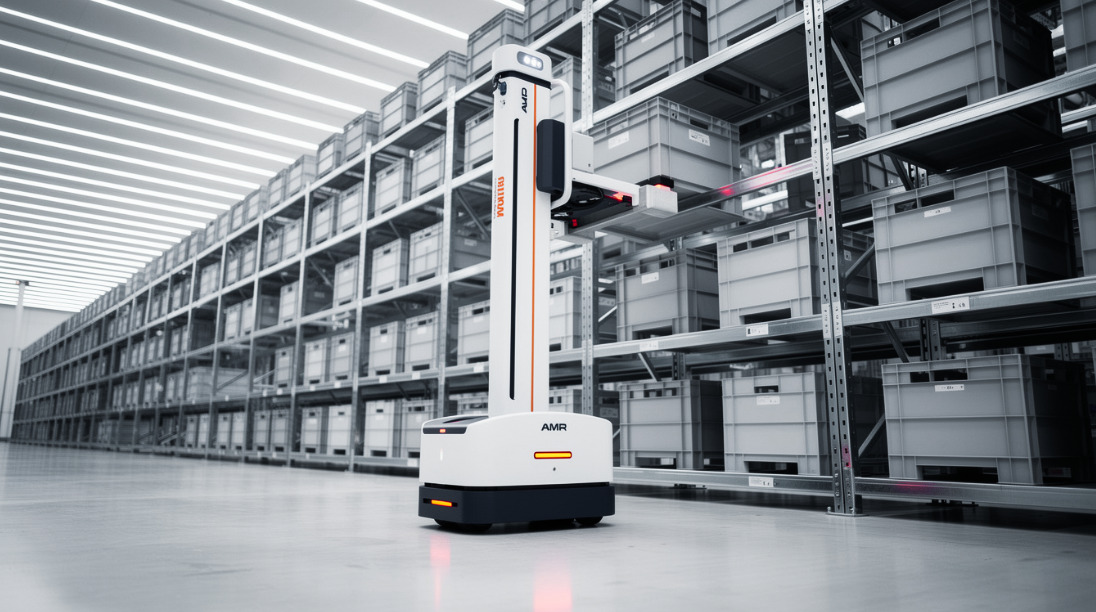
Autonomous mobile robots are moving beyond traditional warehouses and factories into hospitals, airports and other changing environments. As adoption grows, the technology inside the wheels is becoming a decisive factor in how much value each robot can deliver.
A complete drive system combines the motor, gearing, brake, encoder and controller. Together, these elements determine speed, payload capability, positioning accuracy and energy consumption. Precise wheel control is also important when robots load or unload materials, work near people or operate onboard tools such as grippers.
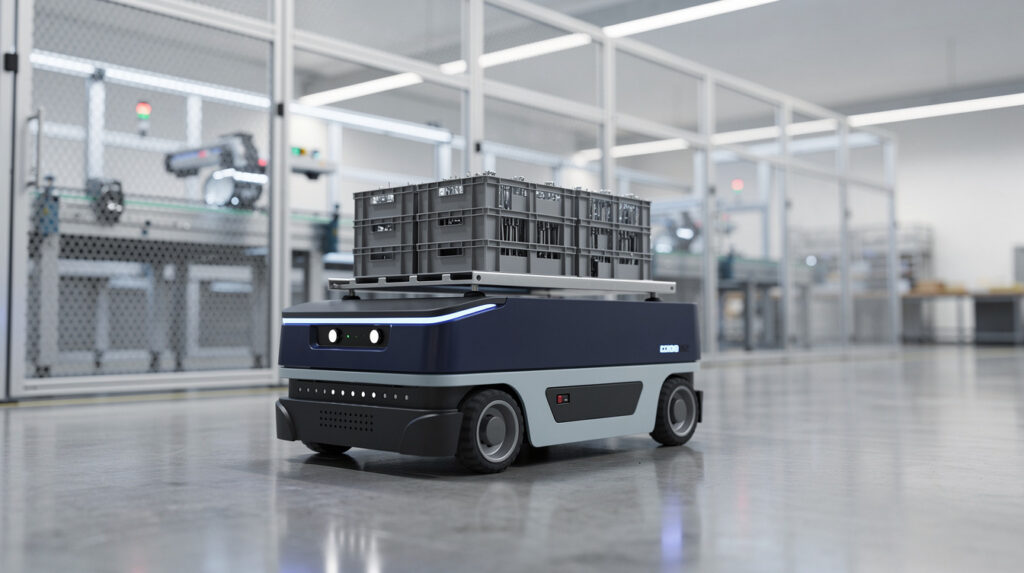
Safety and integration become design priorities
Safety functions must be designed into the propulsion architecture rather than added late in development. Safe Torque Off (STO) can disable the drive power stage so the motor cannot actively generate torque. A dual-channel hardware implementation provides additional tolerance: interrupting either input blocks the motor switches and leaves the drive torque-free.
For manufacturers, a pre-engineered wheel drive can reduce integration work. Combining the principal components in one tested unit removes mechanical interfaces and can shorten validation. This approach is particularly useful where development teams need to bring an AMR or AGV to market quickly, although some projects will still require individually selected components and application-specific engineering.
More torque in less space
Torque density is a key measure because reducing drive mass can increase payload and improve acceleration or manoeuvrability. Brushless DC motors are widely used because their stationary windings can dissipate heat effectively. Frameless versions remove the conventional housing and shaft, allowing a lower mass and, in some designs, a central passage for cables or other components.
Energy performance depends on the application. Coreless motors avoid iron losses and can be efficient at higher speeds, while iron-core designs can provide more torque in low-speed traction duties. Selecting the correct motor size and winding is therefore a balancing exercise between efficiency, footprint, cost and service life.
Planetary gearing remains a compact, high-torque option, while strain-wave gearing can provide high single-stage reduction ratios, low friction and zero backlash. Multi-axis controllers then coordinate the wheels, with programmable control loops managing torque, speed and position. Suppliers such as Maxon UK can support designers in matching these choices to the robot’s duty cycle.