AI Moves Logistics Toward an Autonomous Operating Model
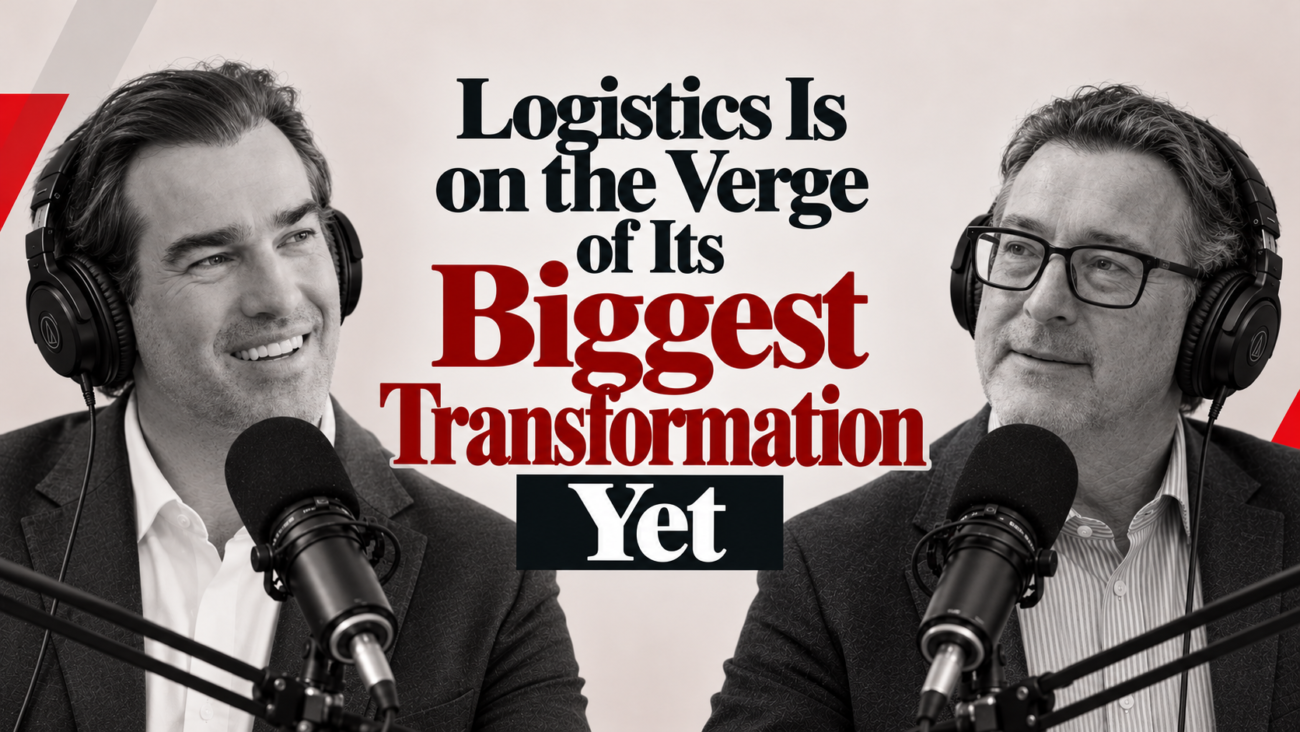
Artificial intelligence may be bringing logistics to a decisive technology threshold. Jett McCandless, founder and chief executive of project44 and its AI-focused spin-off LSP44, argues that the sector could see a pace of change comparable with the arrival of containerisation.
The discussion, recorded at the Port of Hamburg for Logistics Business Conversations, focuses on how AI is already being applied rather than on distant speculation. Software agents are being developed to contact transport operators directly, clarify missing or inconsistent shipment information and support the early detection of possible cargo theft.
From visibility to measurable savings
For industrial companies, the immediate value lies in turning fragmented logistics data into operational decisions. Better visibility across a supply chain can reduce uncertainty around inventory, transport status and exceptions. McCandless cites one business that cut its inventory by about $150 million after improving supply chain visibility.
That example illustrates why AI adoption is not limited to automating administrative tasks. When systems can interpret events and act on them, companies may be able to respond faster to delays, investigate anomalies sooner and reduce the buffers maintained against unreliable information.
Trust, skills and the speed of adoption
The transition also raises questions that technology alone cannot answer. Logistics companies must decide how much commercially sensitive data can be shared with external platforms and how human teams will work alongside systems that increasingly handle complex communications.
The employment implications are equally significant. AI could remove repetitive work while changing the skills required in transport and supply-chain roles. Companies that delay adoption may face a competitive gap as more responsive, data-driven operators improve service and resource utilisation.
McCandless expects the next five years to bring a sharp acceleration in logistics technology. The central issue for industrial businesses is therefore not whether AI will enter the supply chain, but whether their data, processes and workforce are ready to use it responsibly.