Hydrogen reachstacker enters Rotterdam terminal trial
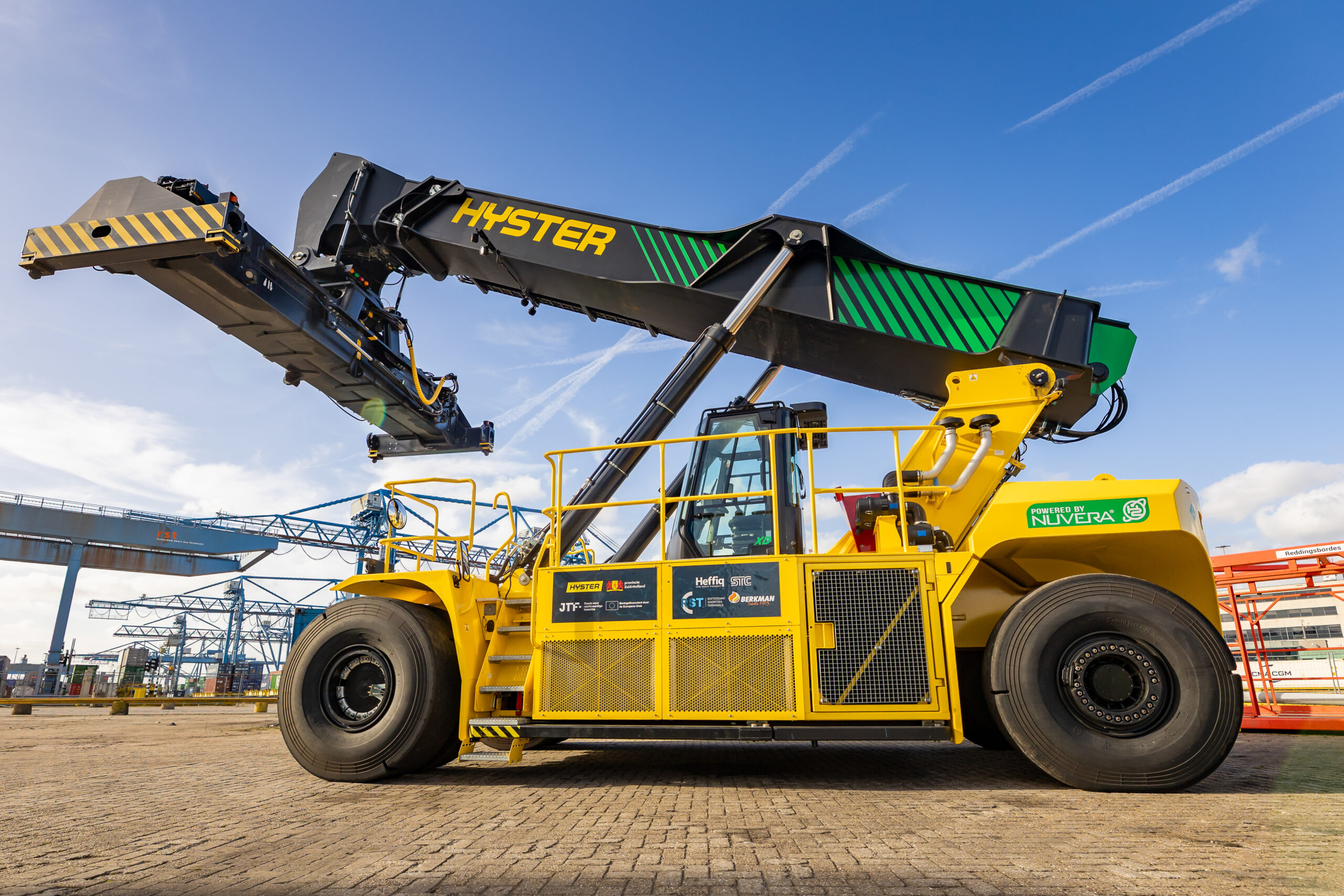
A hydrogen fuel-cell reachstacker has entered service at Rotterdam Shortsea Terminals (RST), giving port operators a live test of zero-tailpipe-emission equipment for intensive container handling.
The Hyster RSJ46-33XDH/62 will work mainly with 45-foot containers, including open-top units. A dedicated 45-foot spreader adapts the machine to RST’s operating profile. Its powertrain combines a 60kW Nuvera fuel-cell engine with a 130kWh lithium-ion battery: hydrogen is converted into electricity, while the battery supports the machine’s operating demands.
Testing hydrogen in daily operations
The deployment is part of a five-year innovation programme backed by the Province of South Holland and the European Union’s Just Transition Fund. RST, Berkman Energie Services, Hyster, STC Next and HarbourHUB are developing a field laboratory that combines the reachstacker with a modular hydrogen refuelling station.
The objective goes beyond demonstrating a vehicle. The partners will examine how hydrogen can be integrated into port and industrial processes without depending directly on the electricity grid. Operational experience at RST should provide evidence on equipment availability, refuelling and service requirements under demanding container-terminal conditions.
The machine also uses the software architecture shared with other Hyster electric products. That common platform is intended to simplify the operator experience, diagnostics and maintenance processes as fleets add different low-emission drivetrains. Hyster and authorised dealer Heffiq will support the trial, with Heffiq providing local service expertise and Hyster specialists working alongside the terminal team.
Technology paired with skills development
The programme includes a joint experience centre where employees, students and logistics professionals will learn about hydrogen safety and efficient operation. This links the equipment trial to a wider industrial challenge: decarbonisation requires not only new machines and energy infrastructure, but also people able to operate and maintain them.
For industrial companies, the Rotterdam project offers a practical model for evaluating hydrogen in applications where battery-only equipment may not meet power or uptime requirements. Its results are expected to inform future regulation, standardisation and energy planning for port logistics.