




Road freight is becoming a credible middle ground for companies moving goods from China and Southeast Asia to Europe. Current door-to-door journeys can take about 11–17 days, compared with roughly 5–12 days for air freight and 30–45 days for sea transport.
For industrial businesses, the change is less about replacing one transport mode with another than about improving operational choice. A factory waiting for components, an electronics distributor responding to demand or a retailer replenishing seasonal stock may need delivery within two weeks—not within a few days. In those cases, road transport can provide sufficient speed while avoiding air freight’s premium.
Technology supports predictable delivery
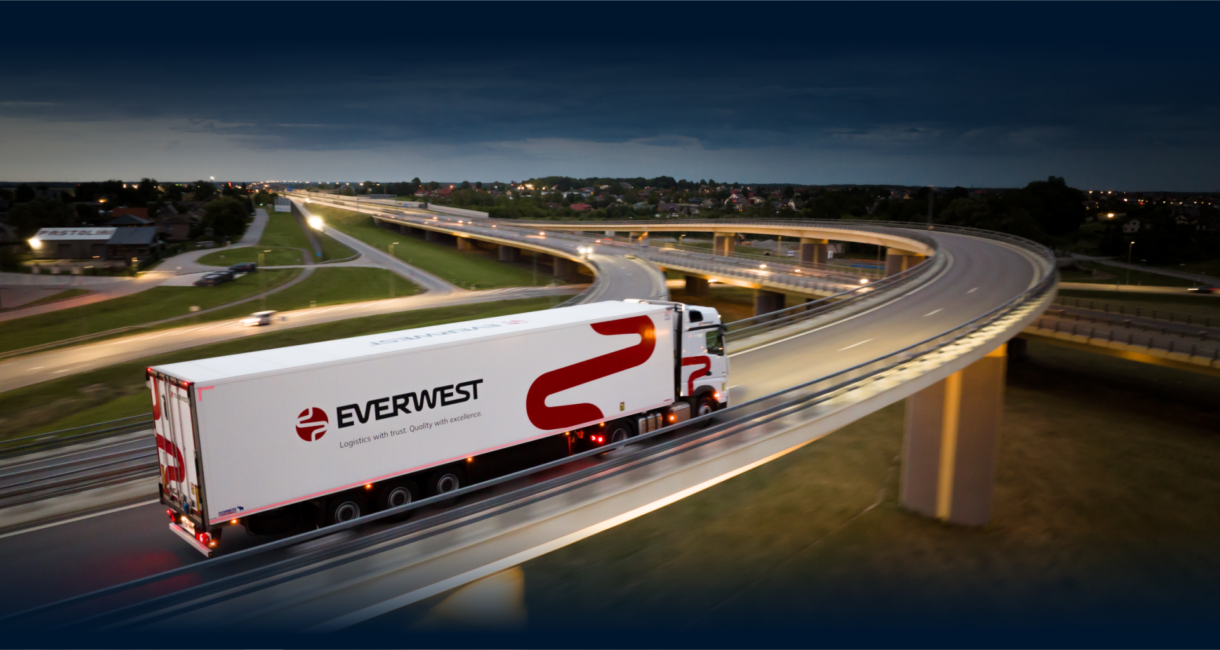
International road corridors, shipment visibility and integrated door-to-door services are helping logistics providers make the option more usable. Everwest reports completing a China-to-Sweden shipment for a fashion customer in 11 days, including collection, customs clearance and final delivery.
That end-to-end measure is important for industrial planning. Comparing only airport-to-airport or terminal-to-terminal transit can obscure handling, processing and last-mile requirements. Better visibility across the entire journey can help purchasing and production teams decide whether a shipment genuinely needs air speed.
Everwest CEO Zigmas Mikoliūnas says companies often pay for air freight because they want certainty rather than because every shipment requires maximum speed. The company’s [road transport services](https://www.everwest.net/) can cost up to 70% less than air freight, although the result depends on route, cargo and market conditions.
Speed, cost and emissions in one decision
Road freight is relevant to automotive components, consumer electronics, smart-home products, robotics, fashion and e-commerce. Some pharmaceuticals, food products and lithium-ion batteries may also qualify when regulatory and handling requirements are satisfied.
Everwest estimates that road transport on Asia–Europe routes can produce about 10 times fewer CO₂ emissions than air freight. Actual performance varies with distance, vehicle utilisation, fuel and shipment characteristics, but shifting suitable cargo away from air can support both cost control and emissions reduction.
Air remains necessary for exceptionally urgent or high-value shipments, while sea transport continues to suit large, planned volumes. The practical question for industrial companies is whether an 11–17-day road journey meets the production, inventory and customer requirement. If it does, the fastest available option may not be the most effective one.