




Warehouse operators are turning to artificial intelligence and robotics as order volumes rise, product ranges widen and delivery windows tighten. The technology is increasingly being deployed not only in new distribution centres, but also in existing buildings where space and labour are constrained.
The global warehouse automation market is projected to expand from about €21 billion in 2025 to €42 billion by 2030. That growth reflects a broader shift: robots are moving from transporting goods to handling them, while software coordinates equipment, inventory and tasks in real time.
Robots move into product handling
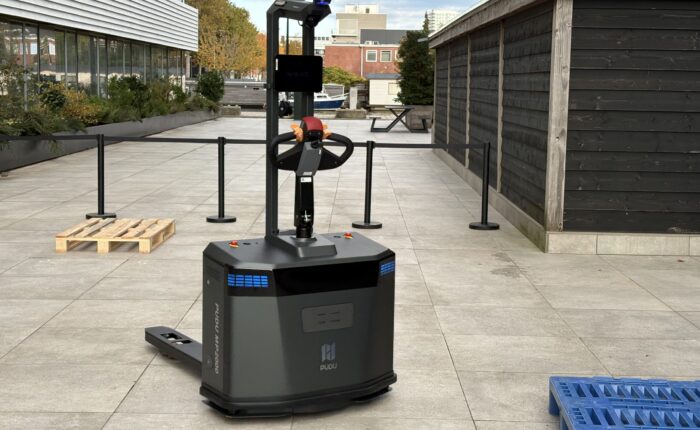
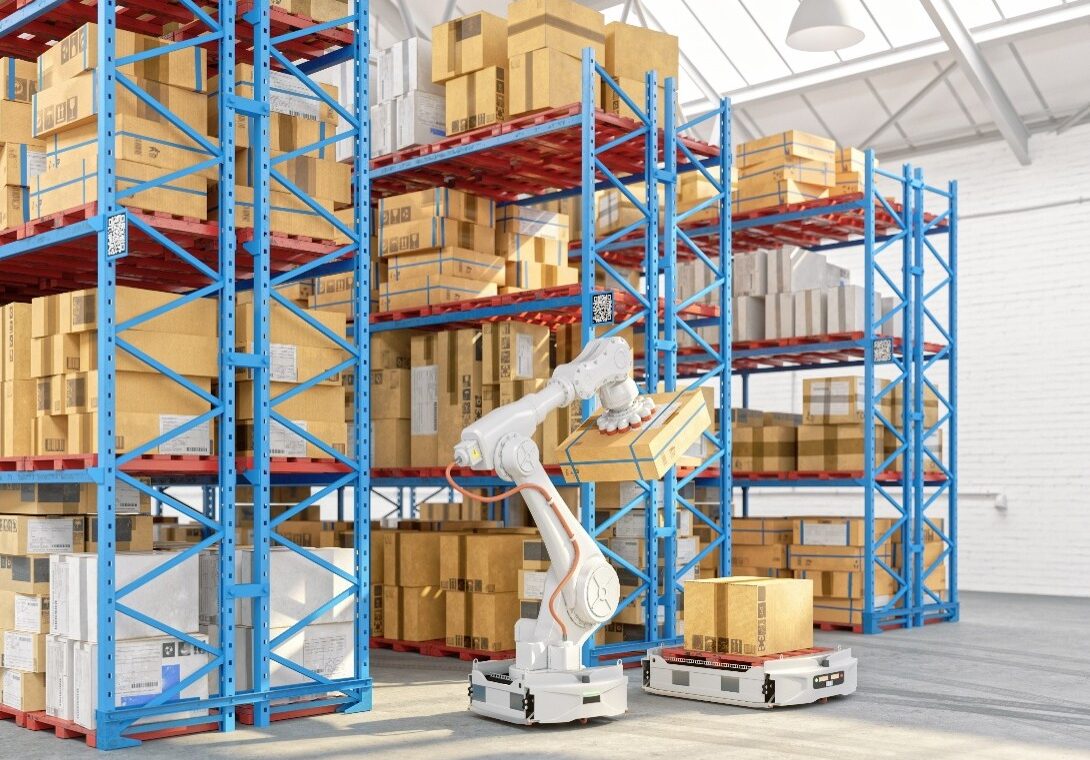
Improved machine vision, gripping systems and AI are allowing robots to work with a wider mix of items. Applications now include picking, stowing, depalletising and packing, in addition to established transport functions. Humanoid systems remain at an early stage, with initial warehouse trials focused largely on moving cases and transferring goods between machines.
Structured warehouse layouts make the sector a practical environment for developing these systems. At the same time, labour shortages, higher wages and falling automation costs are strengthening the commercial case for mechanisation.
More capacity from existing buildings
AI can support complex fulfilment by deciding where products should be stored, how orders should be routed and which tasks should be assigned to individual robots. In goods-to-person operations, software can also schedule retrievals so inventory arrives at picking stations in an efficient sequence.
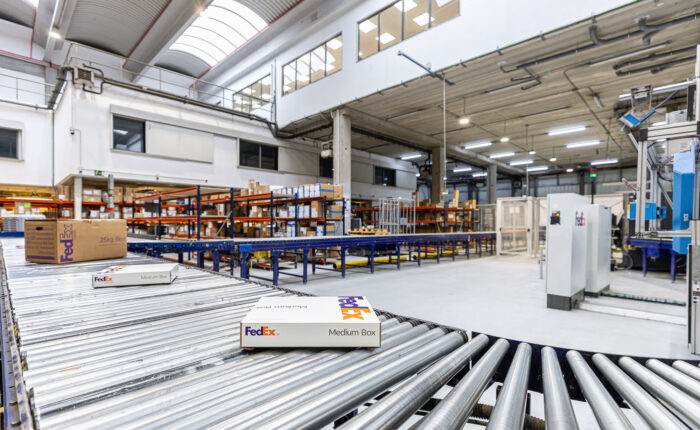
Modular automation is particularly relevant to retrofit projects. High-density matrix, or cubic AS/RS, systems can be configured for different sizes and capacities and are suited to operations with many stock-keeping units and relatively light loads. They can connect with existing conveyors and automation, supporting upgrades by zone rather than requiring a complete rebuild. Adoption of these systems is estimated to grow by 20–25% over the next five years.
Warehouse stock growth is expected to moderate from roughly 5% annually in 2020–25 to 3–4% towards 2030 across Europe, the US and Asia-Pacific. That makes better use of current floor space increasingly important.
Integration becomes a competitive factor
Operators are seeking complete systems that combine robots, storage, sortation, conveyors and warehouse software. Platform-independent integrators can connect equipment from multiple suppliers, while orchestration platforms manage robot fleets, task allocation and material flows.
For industrial companies, the priority is not simply adding individual machines. The value of an investment will depend on whether the connected system raises throughput, uses space more effectively and can adapt as demand changes. Further industry analysis is available from L.E.K Consulting.