




Pudu Robotics used its first European Partner Summit in Amsterdam to present a strategy built around one artificial-intelligence platform supporting several robot formats. The Chinese manufacturer says the approach should make automation easier to deploy across logistics, manufacturing and service operations.
From pallet transport to broader automation
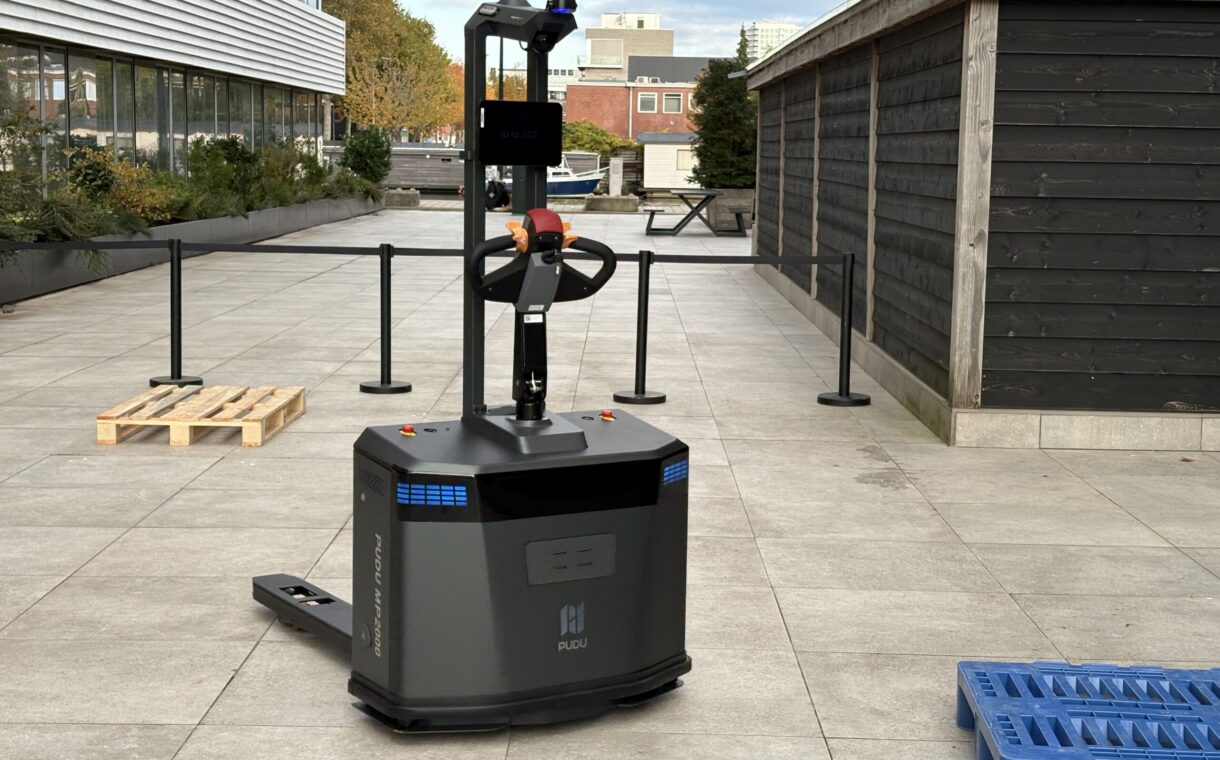
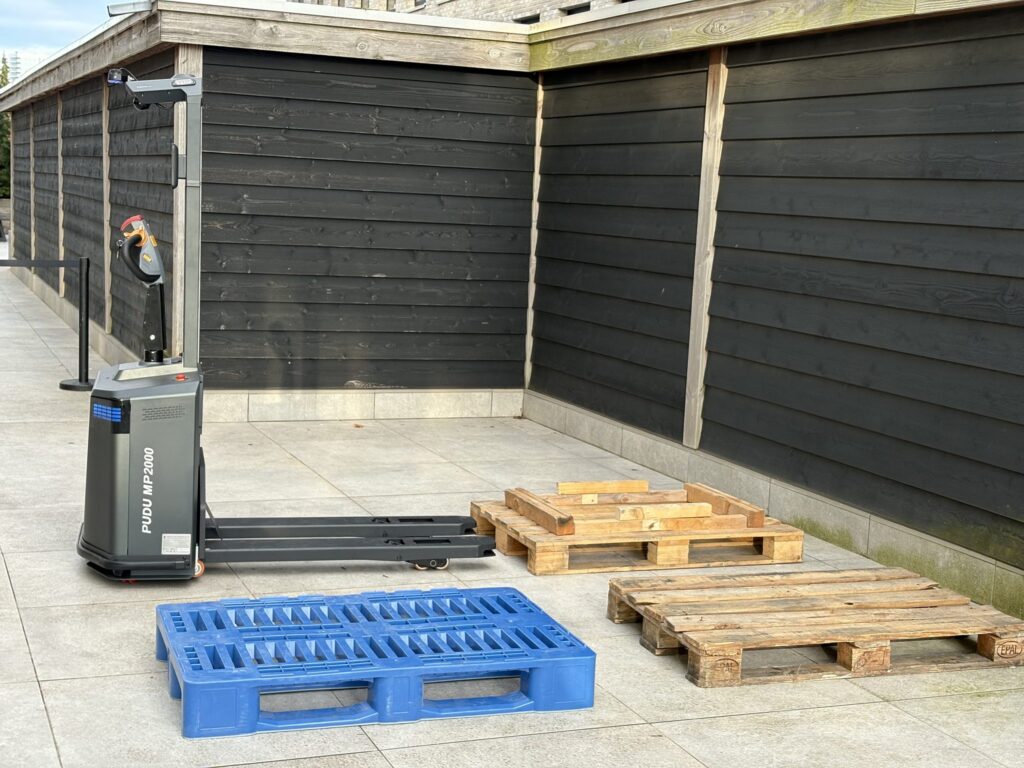
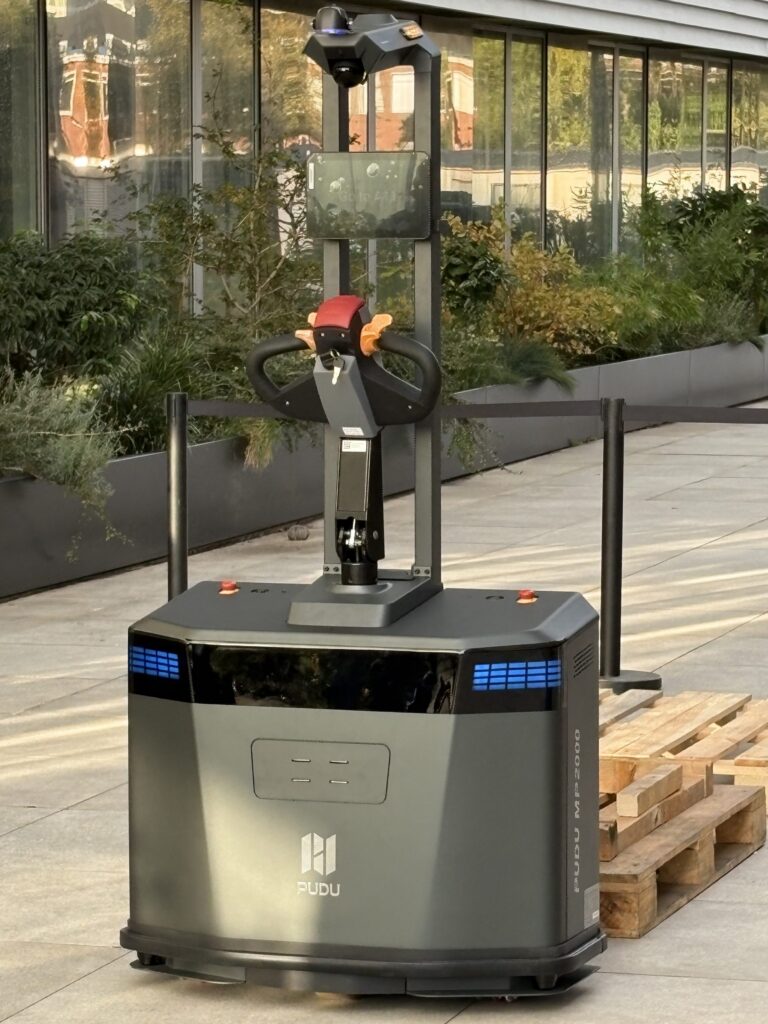
The company’s industrial portfolio, launched in 2024, includes the MP2000 autonomous pallet-handling robot. It can carry loads of up to 2,000kg and uses AI-based load-carrier recognition, adaptive fork alignment and a fork-insertion cycle of around 20 seconds. The intended applications span factories, warehouses and logistics facilities.
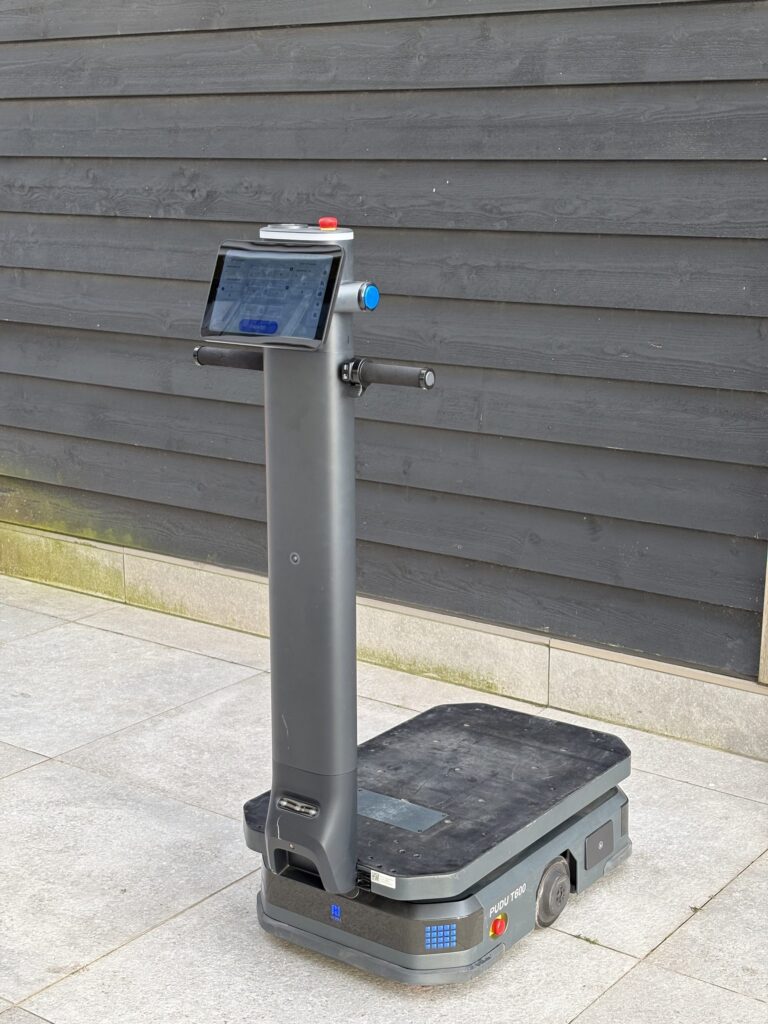
Pudu also offers the T150, T300 and T600, compact industrial delivery robots differentiated by lifting capacity. Their one-piece die-cast construction, simple commissioning and interchangeable attachments are designed for continuous internal transport. The machines can operate around the clock, while Pudu’s solution teams develop APIs for customer deployments.
The industrial products are sold through dealers and systems integrators, making channel development a central part of the company’s European expansion. Pudu is seeking additional partners, and generally begins with customer pilots to validate operational requirements before wider deployment.
Specialists, semi-humanoids and humanoids
CEO Felix Zhang described three broad robot categories: specialised machines for repetitive work, semi-humanoid systems such as the Flashbot Arm, and more human-like robots intended to handle a wider range of tasks. The company’s public product ecosystem covers industrial, cleaning, delivery, home, outdoor and embodied robotics.
The commercial argument is reuse. A common AI foundation could allow capabilities developed for one machine to be transferred to another, while purpose-built hardware remains matched to the task. For industrial customers, that may reduce development effort and support gradual automation rather than a single large-scale conversion.
Pudu identifies Europe as its largest market and cites logistics deployments involving DHL, Kuehne+Nagel and Shaoke Logistics. Its next challenge is acceptance as robots move into closer interaction with people. Zhang argues that household humanoids would eventually need to cost less than $10,000 to achieve broad adoption. For warehouses, however, the immediate opportunity remains practical: reliable movement of goods, scalable integration and a clearer route from pilot project to daily operation.