




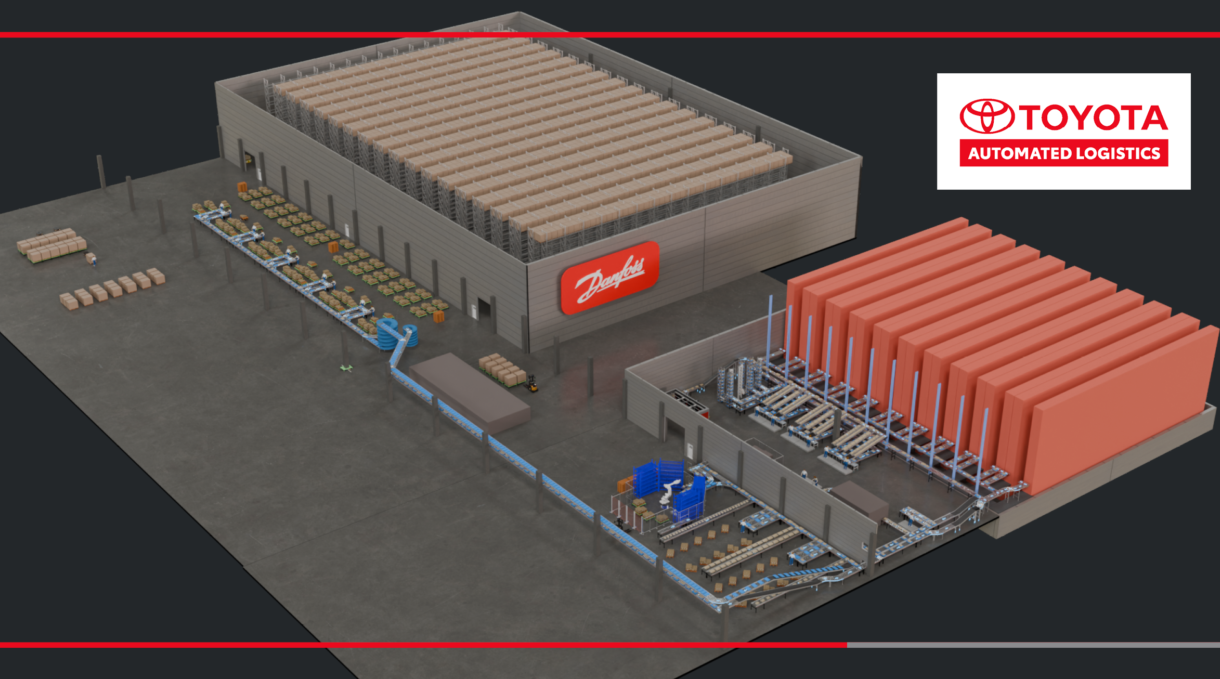
Danfoss is preparing a major overhaul of the intralogistics operation at its Central Distribution Centre in Rodekro, Denmark. Toyota Automated Logistics (TAL) has been appointed general contractor for the project, which will replace a logistics system commissioned in 2001 with a more automated and adaptable architecture.
The programme extends a long-running relationship with viastore, whose systems have supported the site for decades. viastore became part of Toyota Automated Logistics in April 2026, bringing the established supplier relationship into the wider TAL organisation.
Autonomous pallet movement
A central element will be a goods-to-person pallet solution. Top-loading autonomous mobile robots will operate with Simultaneous Localization and Mapping navigation, replacing the existing pallet conveyor arrangement. Danfoss says the resulting handling area will be more flexible and scalable, allowing the layout and capacity to be adjusted as requirements change.
The project also targets small-parts logistics. Process-specific robotic systems will automate selected material flows, with the aim of raising productivity while improving workplace ergonomics. The upgraded installation is intended to provide additional capacity for future growth rather than simply reproduce the current operation at a higher speed.
Phased implementation
Installation is scheduled to start in February 2027. Work will be delivered through several phases so the distribution operation can transition to the new technology progressively. Danfoss plans to bring the modernised facility into operation in December 2028.
For Danfoss Climate Solutions, the investment is linked to faster and more reliable customer service, higher productivity and greater resilience. The company describes the new design as a way to build a logistics structure that can respond more effectively to changing demand.
TAL says its role will extend beyond commissioning, covering planning, operational control and continued optimisation after go-live. That approach reflects a broader industrial shift: automation projects are increasingly judged not only by the equipment installed, but also by how readily the system can evolve over its operating life.