ADM scales electric HGVs with charging-led fleet strategy
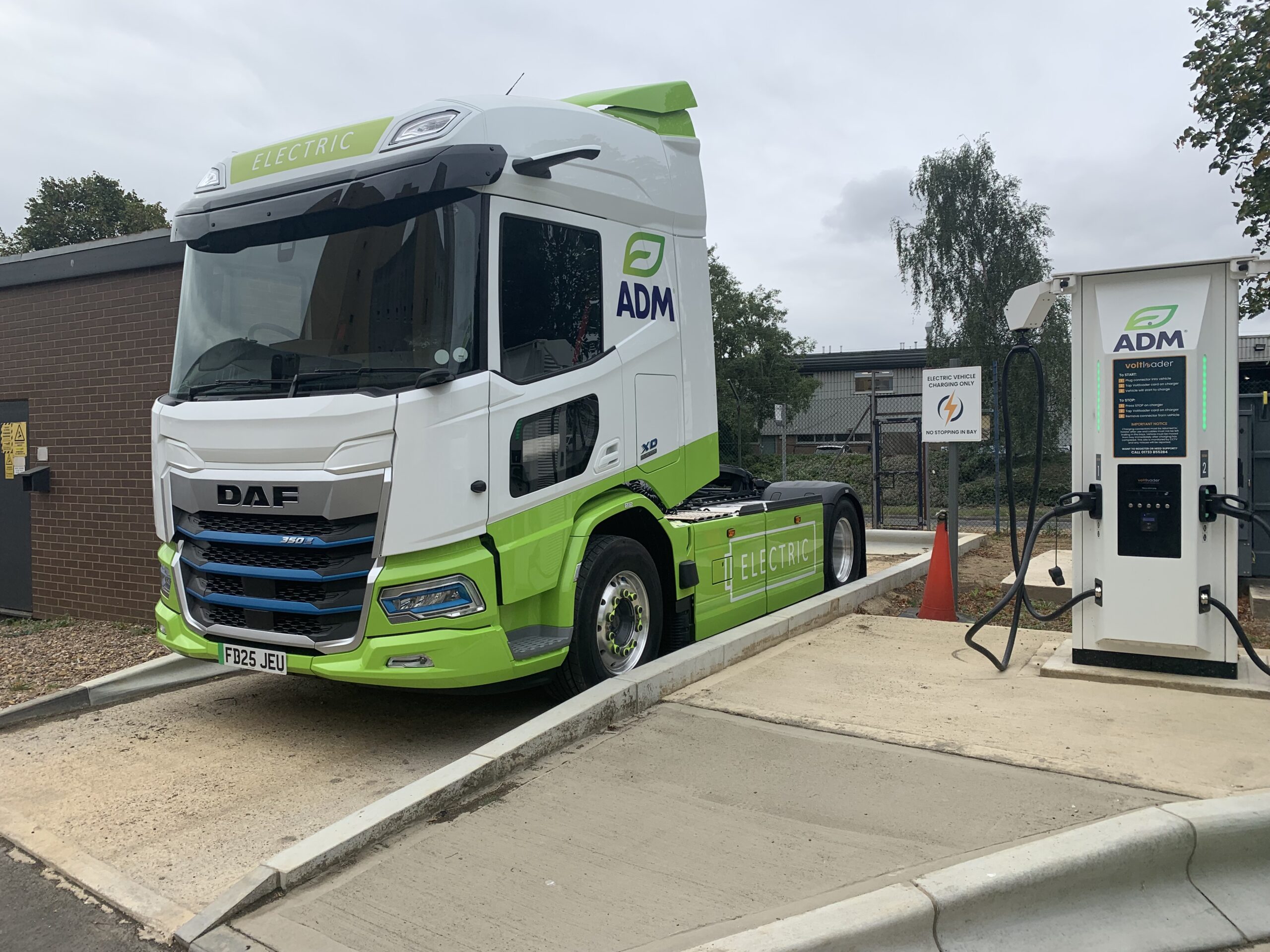
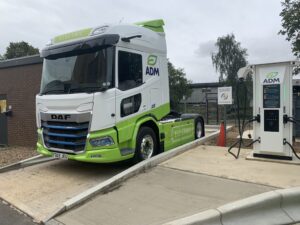
ADM has expanded its UK electric heavy goods vehicle programme to five trucks across Corby, Knottingley and Avonmouth, turning an initial trial into a wider fleet strategy.
The project began at Corby with one electric HGV and a mobile charger. That arrangement allowed ADM and Voltloader to test the vehicle within a demanding, multi-shift logistics operation before committing to permanent infrastructure.
Charging designed around utilisation
After the pilot, Voltloader installed an ultra-rapid charging system at Corby. Its role is not limited to replenishing batteries: the installation was configured to support double-shift work and reduce time spent waiting for vehicles to return to service. The charger is also available to third-party commercial operators.
The approach reflects a broader industrial lesson. Electrification depends on coordinating vehicle capability with charging capacity, route planning, operating schedules and asset utilisation. For ADM, that coordination had to protect the movement of approximately 800,000 tonnes of wheat through its UK milling network each year.
Measured emissions and operational gains
ADM estimates that replacing the previous diesel fleet configuration with the electric vehicles will cut transport-related carbon dioxide emissions by about 375 tonnes annually. The company says customer deliveries and routine operations continued without disruption.
Drivers have also reported lower noise and vibration, creating a more comfortable cab environment. Ashley Fuller, managing director of ADM Milling, said the original objective was to establish whether an electric HGV could work effectively in the fleet; the trial ultimately demonstrated a wider opportunity.
Voltloader chief executive Dave Rose said the programme combines electric haulage, charging services and site infrastructure in a model that could be reproduced elsewhere in ADM’s network.
Next applications
The partners are assessing whether the same operating model can support inbound agricultural transport and downstream food distribution. Experience from the three sites gives ADM a practical basis for scaling electrification while maintaining supply-chain service levels.
The next phase will therefore depend less on simply adding vehicles than on matching infrastructure and scheduling to the realities of industrial transport.