




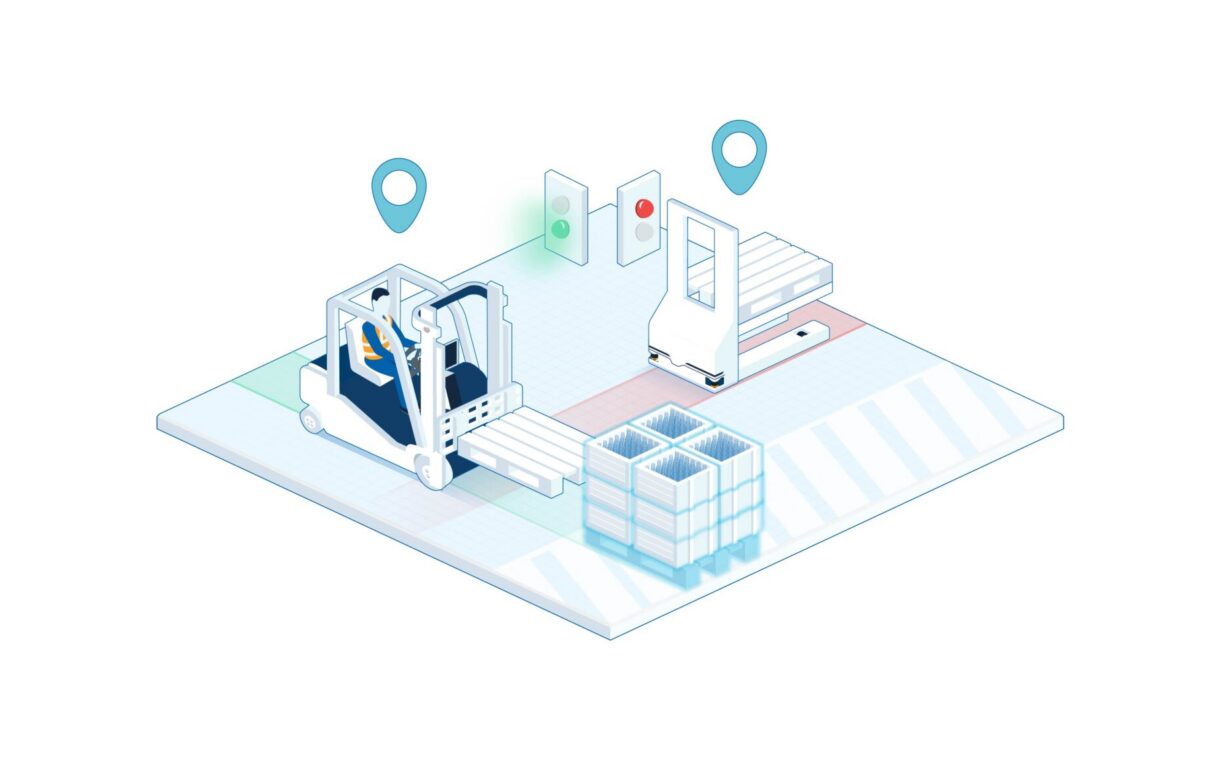
BlueBotics has upgraded its ANT locator solution to support unified mission dispatch across manual forklifts and autonomous mobile robots. The change allows ANT server, the company’s fleet-management platform, to assign work to either vehicle type from a central system.
Dispatch decisions can use the real-time position of each tracked forklift. For industrial operators, that creates an opportunity to select the nearest suitable vehicle, reduce empty travel and balance workloads between AGVs, AMRs and human-driven trucks. A dedicated in-cab interface also lets forklift operators signal availability and accept assignments without leaving the vehicle.
One operating picture for mixed fleets
Running separate management systems for robots and conventional forklifts can fragment material flows and increase software and support overhead. With ANT locator feeding vehicle coordinates into ANT server, companies can manage both categories within a common dispatch environment. BlueBotics says this can simplify the IT architecture, reduce the need for overlapping licences and make onboarding, maintenance and fault investigation more straightforward.
The same location data is intended to improve traffic coordination. In areas where autonomous and manual vehicles share aisles and work zones, ANT server can use live forklift positions when managing robot movements. This gives the fleet manager a more complete view of site traffic and is designed to reduce conflicts, deadlocks and inefficient use of floor space.
Traceability and operational insight
The update also addresses a visibility gap around manually handled pallets. Because a human-driven forklift is not restricted to fixed programmed destinations, its final drop-off location may otherwise be difficult to confirm. Position data sent to an existing warehouse management or logistics system can provide a record of the pallet journey from collection through delivery.
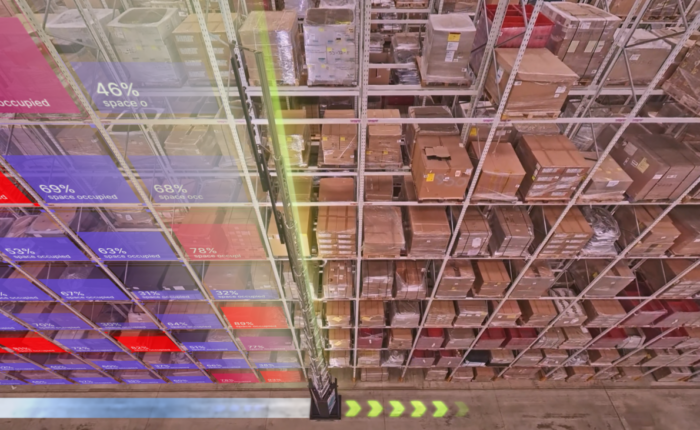
ANT locator can additionally generate heatmaps and operational analytics. These tools help teams examine recurring routes, congested areas and travel efficiency, supporting changes based on observed movement rather than assumptions. The platform is integrated with ANT server and can connect with WMS, MES, ERP or other fleet systems. Optional capabilities extend tracking to people and additional mobile assets in shared industrial spaces.